A manufacturer producing electrical connectors may need to combine metal terminals with plastic insulation in one finished component. The challenge is keeping every terminal in the correct position while molten plastic fills the mold. A vertical molding press can make this task easier because its upright clamping arrangement allows operators to place inserts into an open lower mold before closing it.
However, machine orientation is only one part of the decision. Mold design, insert positioning, table configuration, clamping force, and operating controls all affect production results. Understanding these elements helps manufacturers select suitable equipment, reduce rejected parts, and maintain consistent production.
What Is a Vertical Molding Press?
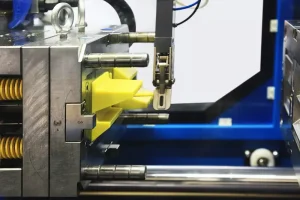
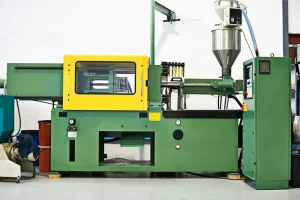
A vertical molding press is an injection molding machine with a vertically arranged clamping unit. Its mold opens and closes along a vertical axis, placing the lower mold half in an accessible, upward-facing position. This arrangement makes it useful for insert molding, overmolding, and applications where metal components, wires, terminals, or other prepared parts must be placed inside the mold before plastic injection.
The term can describe different machine configurations. Some presses use a vertical injection unit, while others use a horizontal injection unit positioned beside the vertical clamping system. Therefore, buyers should examine the complete machine layout rather than assume that every vertical press injects plastic from above.
The main advantage comes from how the mold is positioned. An operator can place an insert into a cavity, locating pocket, or support pin before the mold closes. Gravity helps keep the insert seated during loading. Proper mold features then hold it securely as the machine completes the injection cycle.
This does not mean gravity alone guarantees accurate placement. Small, lightweight, irregular, or flexible inserts may still need dedicated fixtures, locating pins, sensors, or robotic handling.
How Is a Vertical Molding Press Designed?
A vertical molding press combines a clamping structure, injection system, mold assembly, and control system. Each part has a specific responsibility, but they must work together to produce consistent components.
Vertical Clamping Unit
The clamping unit holds the two mold halves together during injection. It includes the platens, guiding arrangement, drive mechanism, and associated safety components. Depending on the machine, the clamping force may come from a hydraulic system, mechanical toggle arrangement, or servo-driven mechanism.
The machine must maintain sufficient force to prevent the mold from opening under injection pressure. If the clamping force is too low, molten plastic can escape through the parting line and create flash. Excessive force is not automatically better because it can increase mechanical stress and affect mold life.
Platen alignment is another important consideration. The upper and lower mold surfaces must meet evenly. Poor parallelism can create uneven pressure, inconsistent part dimensions, and premature wear around the mold.
Injection Unit
The injection unit prepares and delivers molten plastic into the mold. Its main components include the hopper, heated barrel, screw, nozzle, and drive system. Plastic granules enter through the hopper and move through the barrel as the screw rotates. Heat and mechanical energy soften the material before the screw pushes the required shot into the mold.
The injection unit may sit vertically above the mold or horizontally beside the clamping area. The correct arrangement depends on the component, gate location, mold design, and production requirements.
Manufacturers should also check whether the screw diameter, injection pressure, shot capacity, and plasticizing rate suit the selected material. A machine with suitable clamping force can still produce poor results if its injection capacity does not match the part.
Mold and Platen Structure
The mold defines the final component’s shape. It normally contains a cavity, core, runner or hot runner system, cooling channels, vents, and ejection features. Insert molding adds locating features that hold metal or other prepared components in the correct position.
The lower mold half is particularly important because operators often load inserts into it. Its surface should provide clear access to the insert locations without creating unnecessary handling difficulties.
The mold also needs suitable support and alignment features. These help maintain repeatable positioning when the machine opens, closes, and applies pressure. For multi-station equipment, each lower mold section must return to the correct position before the next injection cycle.
Machine Frame and Control System
The frame supports the clamping and injection assemblies. It must resist operating forces without excessive movement. A rigid structure helps maintain alignment, especially during repeated production cycles.
The control system manages machine movements, temperature settings, injection parameters, and safety interlocks. Modern systems may also record process information such as injection pressure, cycle time, and temperature. This information helps production teams identify changes before they create large batches of defective parts.
Common Vertical Molding Press Configurations
The best machine configuration depends on how inserts are loaded, how long loading takes, and how many parts the manufacturer needs to produce.
Fixed Table Design
A fixed-table vertical molding press uses one stationary lower mold position. The operator loads the insert, checks its placement, and starts the molding cycle. After the machine opens, the finished component is removed and the next insert is loaded.
This design is suitable for simpler applications, smaller production volumes, and processes with short loading times. It also avoids the additional mechanisms required by moving-table systems.
Its main limitation is that loading and unloading cannot normally take place at another station while injection is running. The machine may remain idle while the operator prepares the next cycle.
Shuttle Table Design
A shuttle-table press uses a movable table that travels between the loading position and the molding position. The operator can prepare inserts outside the main clamping area while another mold section is being used for injection, depending on the machine design.
This arrangement reduces waiting time and can improve access to the mold. It is useful when insert placement requires several steps or when the operator needs more room to handle components.
However, table movement, positioning accuracy, and safety controls require attention. The system must return to the correct position before the mold closes.
Rotary Table Design
A rotary-table vertical molding press uses a rotating platform with multiple stations. One station can be used for injection while another is used for loading or removing finished components.
This arrangement supports overlapping activities. It can improve production efficiency when insert preparation takes a meaningful amount of time. Some systems also allow separate stations for additional operations, depending on the production layout.
The trade-off is greater mechanical and control complexity. Manufacturers must consider indexing accuracy, table maintenance, mold costs, and the available floor space before choosing this configuration.
How Inserts Are Designed and Positioned
Insert design has a direct effect on the quality of the finished molded component. Even a well-built vertical molding press cannot compensate for an insert that moves, deforms, or fails to bond properly with the surrounding plastic.
Choose the Correct Insert Geometry
Inserts may include threaded bushings, metal terminals, pins, stamped components, wires, mesh sections, and preformed plastic parts. Their geometry should support accurate placement and reliable retention during molding.
Designers should consider the insert’s dimensions, material, surface condition, and expected position inside the finished component. Sharp edges may create stress concentrations in the surrounding plastic. Thin metal sections may also deform under mold-closing or injection forces.
Where possible, the insert should have a defined locating surface. A flat seating area, shoulder, hole, or machined feature can help the mold hold it in a repeatable position.
Use Locating Pins and Dedicated Pockets
Locating pins and pockets help prevent inserts from shifting during mold closure. Their dimensions must match the insert without making loading unnecessarily difficult.
A loose fit can allow movement when molten plastic enters the cavity. A fit that is too tight may damage the insert, slow loading, or make removal difficult. The correct clearance depends on insert tolerances, mold temperature, material expansion, and production conditions.
For delicate components, designers may add support features that protect the insert from direct pressure. These details become especially important when molding around electrical contacts or thin metal terminals.
Consider Insert Preparation
Insert cleanliness affects bonding and finished-part quality. Oil, dust, moisture, oxidation, and other surface contaminants can interfere with adhesion or create visible defects.
Some applications require cleaning, drying, preheating, or surface treatment before molding. The correct preparation method depends on the insert material and the plastic being used. For example, a metal insert may need controlled preheating to reduce temperature differences during molding, but the process must be validated for the specific component.
Production teams should also check incoming insert dimensions. Small changes in thickness or shape can affect seating and cause inconsistent molded parts.
Prevent Insert Movement During Injection
Molten plastic enters the cavity under pressure and can push an insert away from its intended position. The mold must provide enough support to resist this force.
Designers can use locating pins, mechanical supports, cavity pockets, and suitable gate placement to control movement. The plastic flow should reach the insert in a way that reduces unwanted displacement and uneven loading.
A practical design review should examine the insert’s position, the direction of plastic flow, the support points, and the risk of trapped air. These details are often more important than simply increasing machine pressure.
How Does a Vertical Molding Press Operate?
The operating cycle follows the same basic injection molding principles used in other injection molding machines. The vertical arrangement changes how inserts are loaded and how the mold is accessed.
Insert Loading and Inspection
The process begins with preparing the lower mold. The operator or automated handling system places each insert into its designated position. The inserts must sit correctly against their locating features.
Before starting the cycle, the operator checks for missing, damaged, incorrectly oriented, or contaminated inserts. Sensors or vision systems may verify placement in automated applications.
This inspection step prevents defects that would otherwise remain hidden inside the finished component.
Mold Closing and Clamping
Once the inserts are correctly positioned, the machine closes the mold. The upper and lower mold halves meet, and the clamping system applies the required force.
The mold must close without crushing or displacing the inserts. Incorrect insert height, poor alignment, or an obstruction can damage the mold or produce defective parts.
Safety interlocks must confirm that the machine is ready to proceed. Operators should never bypass protective devices to speed up loading.
Plastic Injection and Holding
The injection unit pushes molten plastic through the nozzle and runner system into the mold cavity. The material flows around the inserts and fills the available space.
After filling, holding pressure helps compensate for material shrinkage as the plastic begins to cool. The required pressure and holding time depend on the material, part geometry, gate design, and mold conditions.
Poorly selected settings can create short shots, flash, sink marks, voids, or insert movement. Process adjustments should be based on part inspection and machine data rather than guesswork.
Cooling, Mold Opening, and Ejection
The plastic remains in the mold until it has cooled or cured enough to maintain its shape. Cooling channels help control mold temperature and support consistent production.
Once the required cooling period is complete, the clamping unit opens the mold. Ejector pins or another removal mechanism release the finished component.
The operator or robot removes the part and checks it for visible defects. The next cycle can then begin. On shuttle and rotary-table machines, loading and unloading may take place at separate stations while another mold section is processing a part.
Key Operating Parameters and Quality Checks
A vertical molding press needs controlled operating conditions to produce repeatable results. The correct settings vary by material and component, so manufacturers should establish a validated process window for each mold.
Injection pressure and speed influence how plastic fills the cavity. Excessive speed may create flow marks, trapped air, or insert movement. Insufficient pressure may cause incomplete filling or weak areas.
Melt temperature and mold temperature affect material flow, cooling, shrinkage, and bonding around the insert. Temperatures that are too high can cause material degradation, while low temperatures may create poor filling or weak weld lines.
Clamping force must be sufficient to keep the mold closed. Cooling time must allow the part to become stable before ejection. Cycle time should be optimized only after the team confirms that part quality remains consistent.
Quality checks should include dimensional inspection, insert position, surface appearance, flash, bonding strength, and functional performance where relevant. For electrical components, continuity and insulation tests may also be necessary.
A useful production practice is to record key settings alongside inspection results. This creates a reference when material batches, mold conditions, or machine performance change.
Applications and Benefits of Vertical Molding Presses
Vertical molding presses are common in applications where plastic must be molded around another component. Electrical connectors are a good example. Metal terminals can be placed into the mold and surrounded with plastic to create an integrated part.
Automotive manufacturers may use this approach for sensor housings, electrical connections, and components that combine metal and plastic. Electronics producers use insert molding for terminals, contacts, and compact assemblies. Other applications include threaded inserts, cable connectors, handles, and selected medical or industrial components.
The main benefit is easier insert handling. The open lower mold provides direct access, while gravity can help keep suitable inserts seated before closure. Shuttle and rotary tables can also reduce idle time by allowing loading and molding activities to overlap.
Vertical equipment is not automatically the best choice for every product. Simple plastic components without inserts may be produced more economically on a conventional horizontal machine. The decision should reflect the actual part design, production volume, labor requirements, and automation plan.
How to Select the Right Vertical Molding Press
Start with the component rather than the machine catalog. Review its dimensions, insert material, cavity layout, plastic type, expected production volume, and quality requirements.
Next, assess the mold and table configuration. A fixed table may suit a straightforward, low-volume process. A shuttle table can help when loading requires more time. A rotary table may be appropriate when production needs several stations and a steady output rate.
Check clamping force, shot capacity, injection pressure, platen dimensions, mold height, and available daylight. The machine must accommodate the complete mold assembly and provide enough access for safe insert loading and part removal.
Automation also deserves early consideration. If the manufacturer expects to introduce robots or vision inspection later, the machine should provide suitable access, control interfaces, and space for integration.
Finally, evaluate maintenance support, spare parts, operator training, energy use, and safety systems. A lower purchase price may not represent the best long-term value if the machine is difficult to maintain or cannot meet production targets.
Conclusion
A vertical molding press offers a practical solution for manufacturing components that combine plastic with metal inserts, wires, terminals, or other prepared parts. Its upright clamping arrangement improves access to the lower mold and can make insert placement easier. However, consistent results depend on more than machine orientation.
Mold design, insert support, table configuration, injection settings, cooling, and operator safety all influence performance. Manufacturers should assess these factors together before selecting equipment. A properly matched vertical molding press can reduce handling difficulties, support repeatable insert positioning, and improve production efficiency without compromising part quality.
FAQs
1. What is a vertical molding press used for?
A vertical molding press is mainly used for insert molding and overmolding applications where metal parts, wires, terminals, or prepared components must be positioned inside a mold.
2. How does a vertical molding press hold inserts?
The lower mold supports inserts through locating pins, pockets, and fixtures. Gravity helps keep suitable inserts seated before the mold closes and injection begins.
3. What is the difference between shuttle and rotary tables?
A shuttle table moves between two positions, while a rotary table indexes multiple stations. Both allow loading and molding activities to overlap.
4. Can a vertical molding press produce plastic-only parts?
Yes. However, its main advantage is insert handling. A horizontal machine may be more practical for many conventional plastic-only production applications.
5. Which factors affect vertical molding press performance?
Clamping force, injection pressure, temperature, mold alignment, insert positioning, cooling time, and maintenance all influence production consistency and finished-part quality.